What does Bouwklok do?
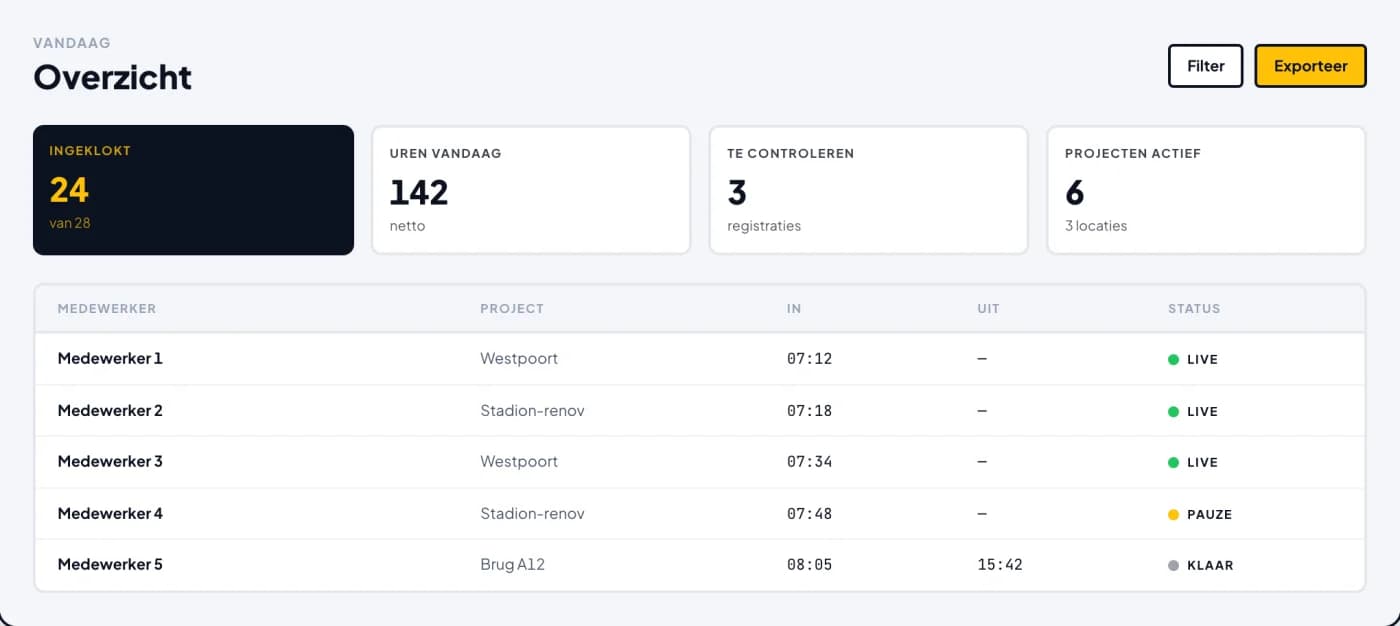
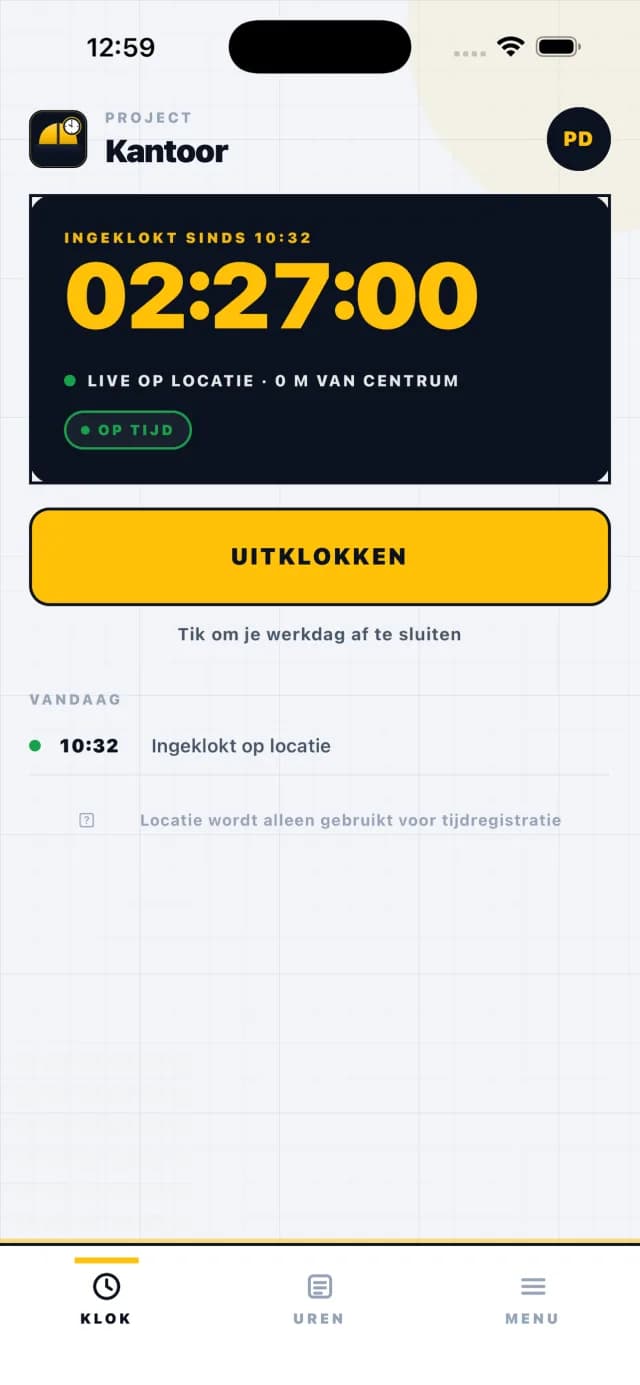
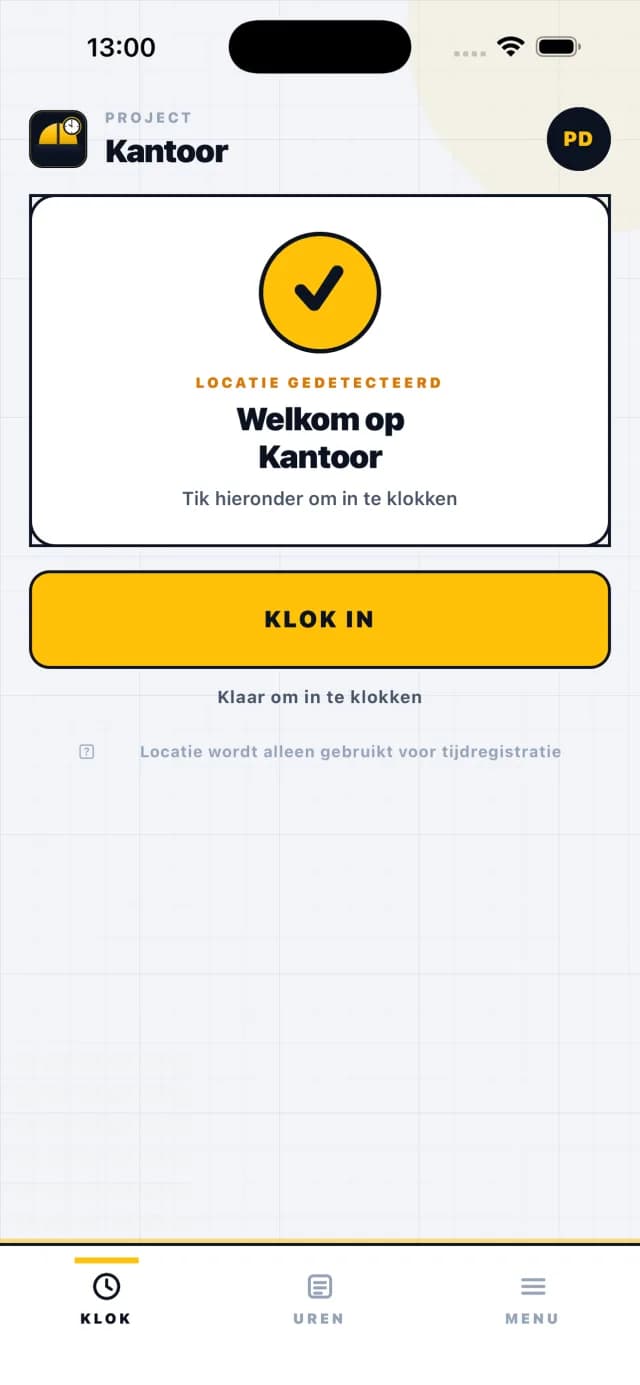
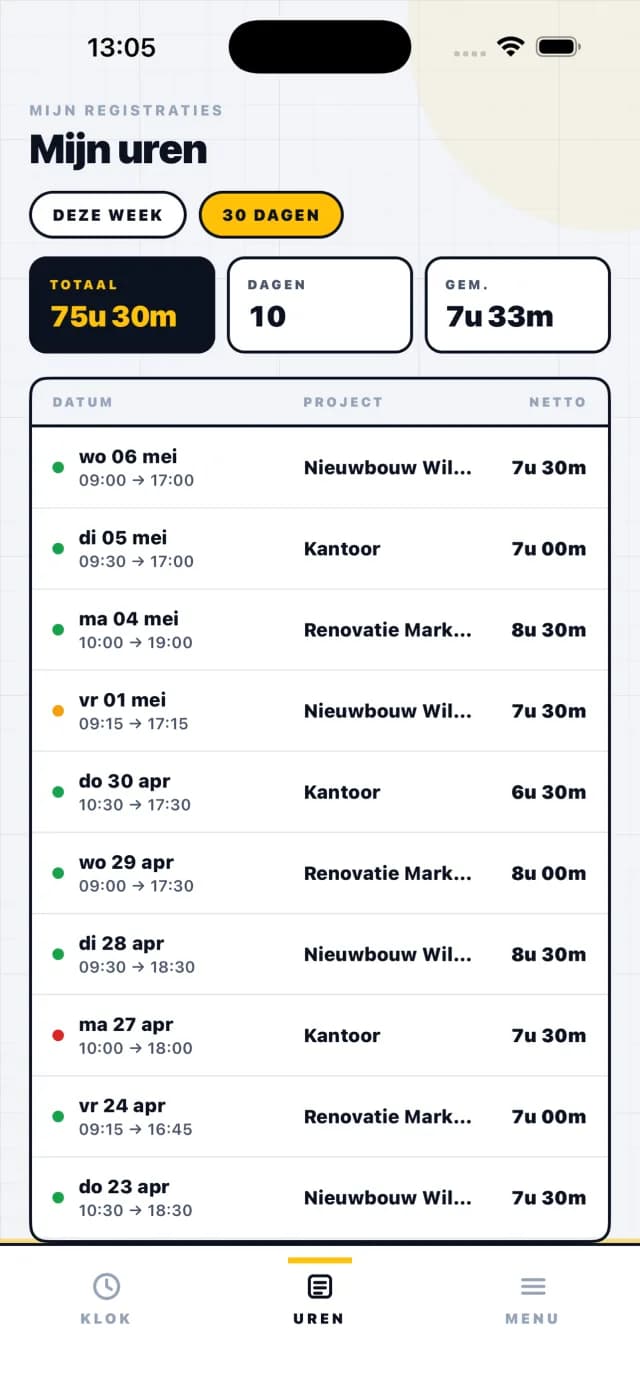
Bouwklok is a time tracking app for construction companies, contractors, installers, electricians and plumbers. A working day runs in five steps. First, the worker arrives on site, and the app recognises which project belongs to it. Second, the worker clocks in with one tap; Bouwklok records the time, the project and the distance to the site. Third, the registration keeps running, and when the worker leaves the site, Bouwklok clocks out automatically. If that fails, for example because the phone is switched off, a server-side check still closes the shift and flags the hours. Fourth, all hours arrive centrally at the office, with whatever needs attention at the top. Finally, the office exports the approved hours to CSV, Excel, PDF or payroll.
What problem does Bouwklok solve, and for whom?
Bouwklok solves the collection of hours at companies that work on location. Without a system, hours arrive by WhatsApp, Excel or paper slips. Workers forget to fill in their hours or to clock out, the office has to recalculate and correct, and only afterwards does it become clear how many hours went into a project. It is never one big moment, but half an hour here and a discussion there, every week again. With Bouwklok, the office sees live who is on which site, and hours come in as they were worked. The Pro plan adds approvals, leave and sick reporting, a weekly timesheet per site for signing, and working rules that follow the collective agreement, such as breaks, overtime and weekend pay. The price is €6 (Basic), €9 (Pro) or €14 (Business) per worker per month, excluding VAT, with no set-up costs and cancellable monthly.
How did VirtuoLab build Bouwklok?
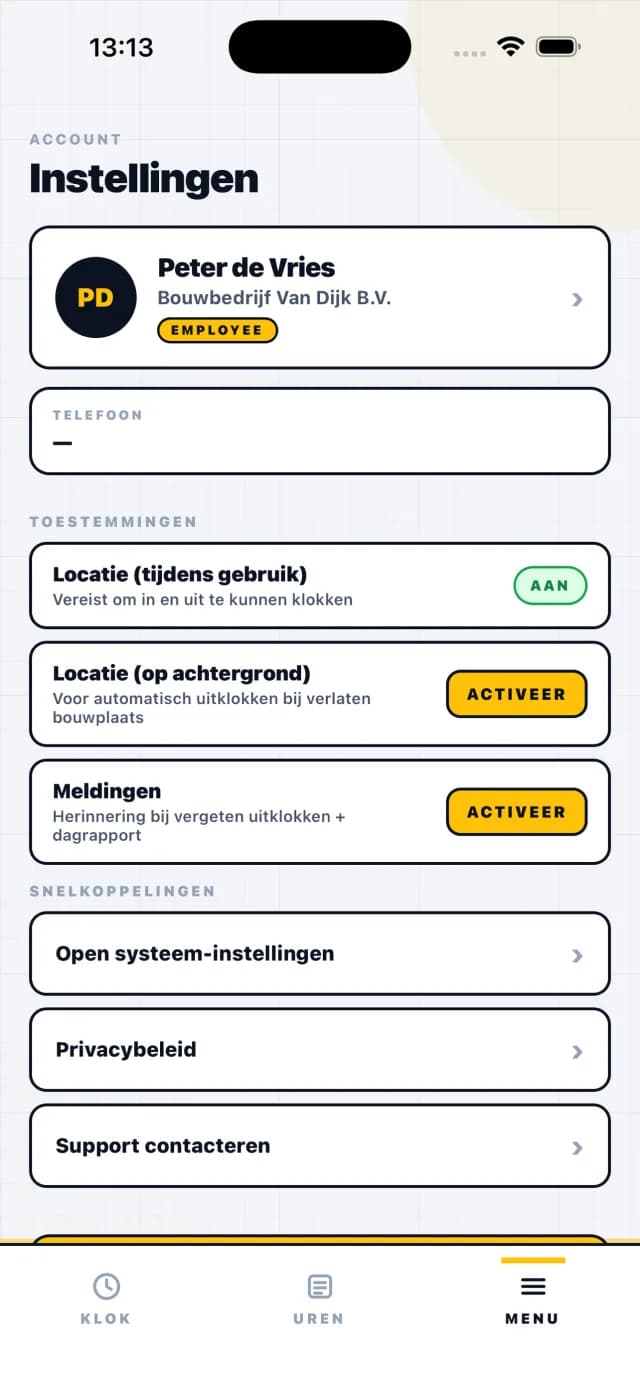
VirtuoLab built Bouwklok from an app for workers, an environment for the office and a shared database. The app is made with React Native and Expo, from one codebase for iOS and Android; the iOS version is in the App Store and the Android version is coming. Location comes from the phone's GPS. The app only uses it for time tracking, and automatic clock-out in the background only works after the worker grants permission for it. The bouwklok.nl website is built with Next.js. The data lives in a PostgreSQL database through Supabase, and a server-side check closes shifts that stayed open on a phone. That keeps the time records correct, even when a phone dies during the day. VirtuoLab uses the same set-up, an app and a web environment on one database, for apps for other businesses.