Web apps, apps and websites,
built to fit.
Software agency in Papendrecht for web apps, mobile apps, SaaS, integrations and dashboards. Fixed price upfront.
Our own products
Software we build and run ourselves
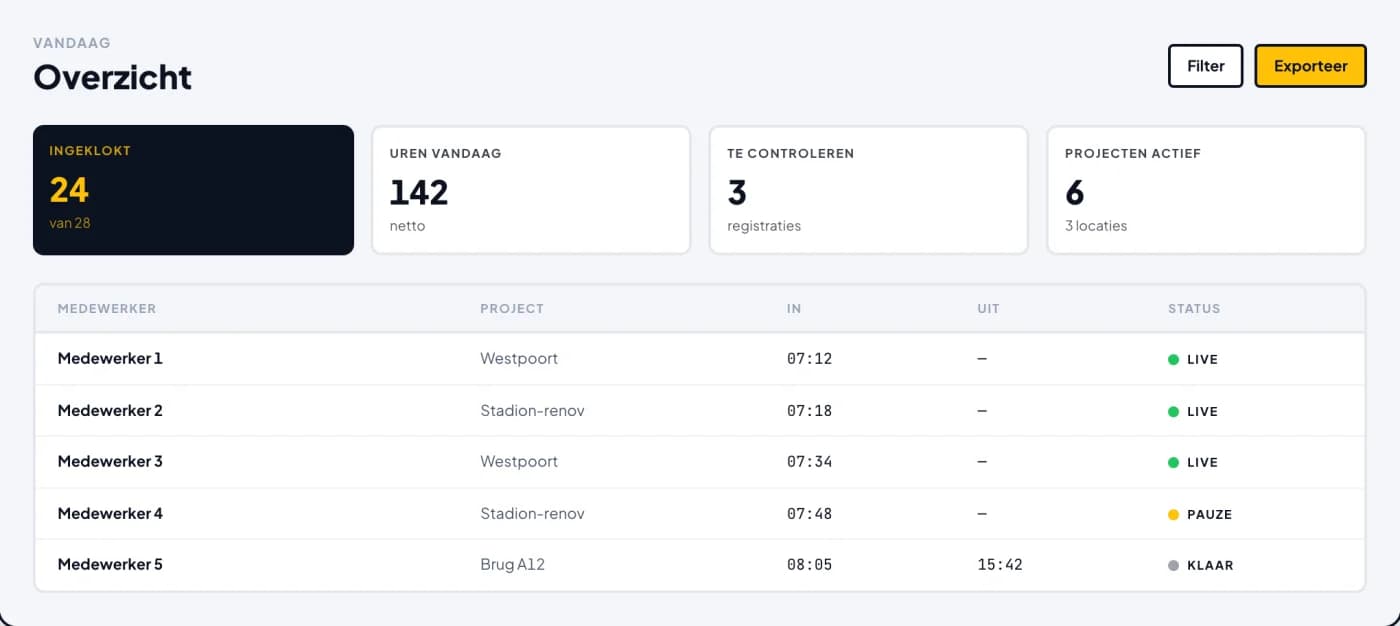
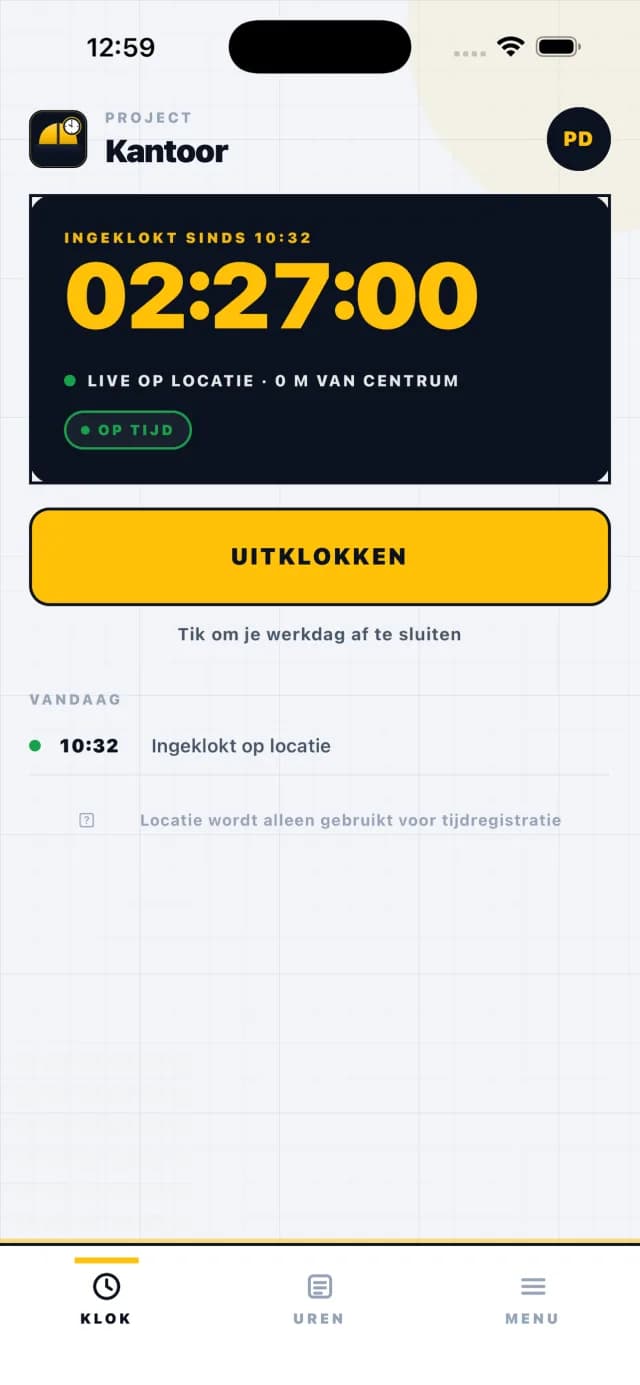
FiscalDesk and Bouwklok are VirtuoLab products. Both are live and can be tried. The images below are recordings and screens from the software itself.
Accounting software for accounting firms
FiscalDesk
- Reads and books invoices automatically
- Only exceptions reach the accountant
- App for clients to scan receipts
Time tracking for construction
Bouwklok
- Clock in on site with a GPS check
- Automatic clock-out on leaving
- Approve and export hours from the office
What we do
Software, web and data for growing businesses
Power BI & dashboards
All your numbers in
one live dashboard
One live report with the numbers from your accounting, webshop and CRM, in your own house style.
Own demos
Projects you can try yourself
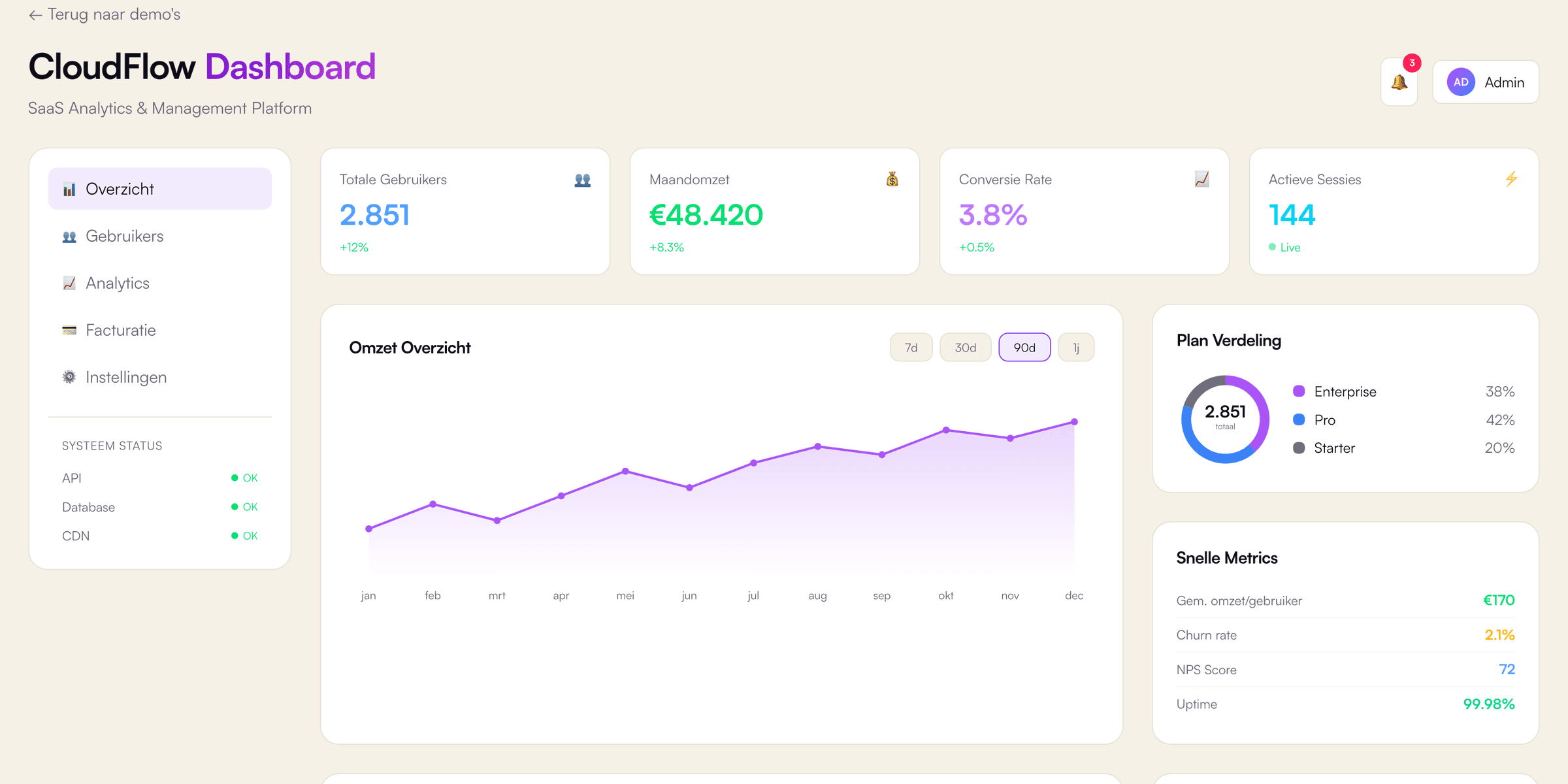
Live demos
Working demos to try yourself
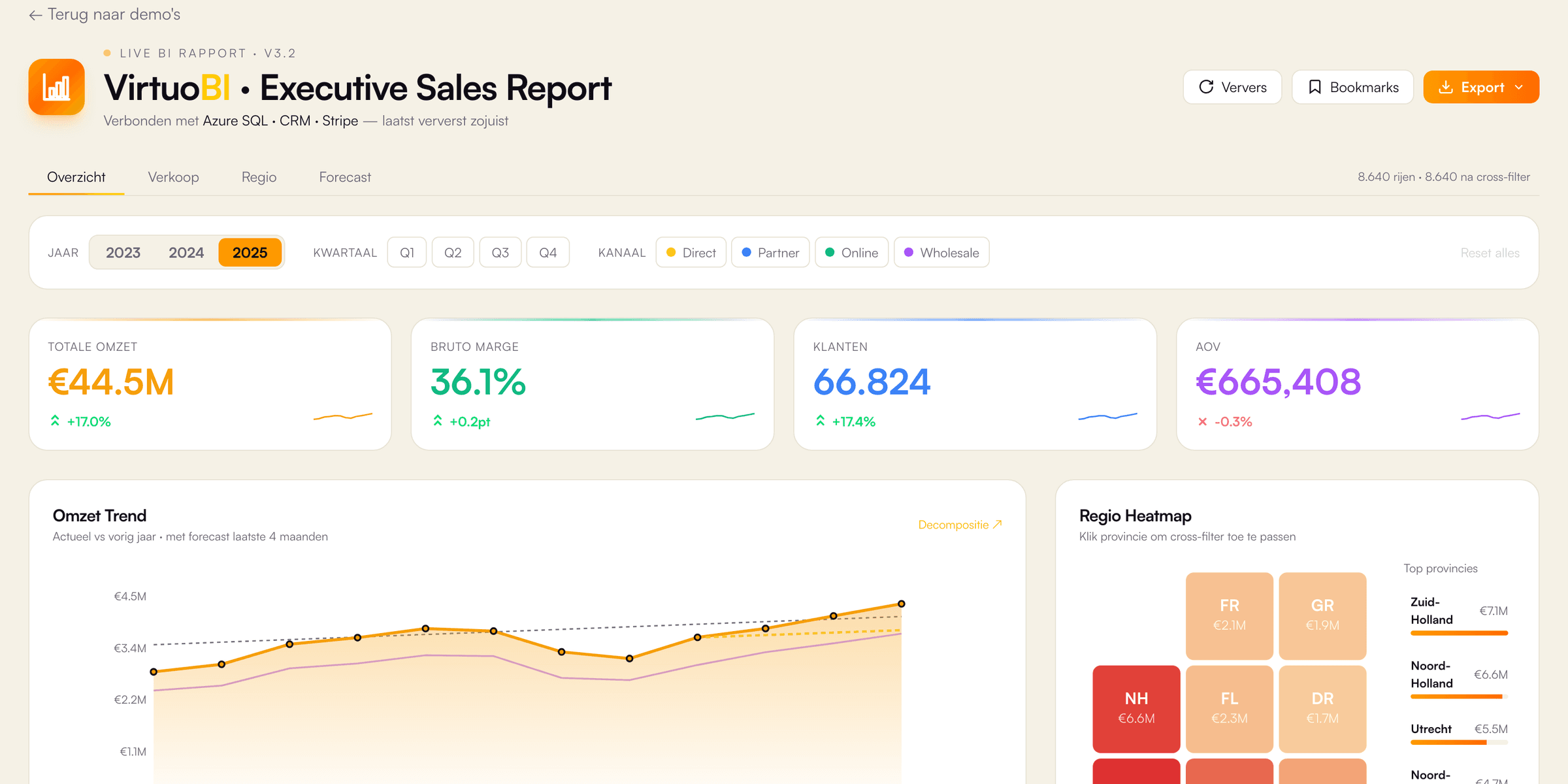
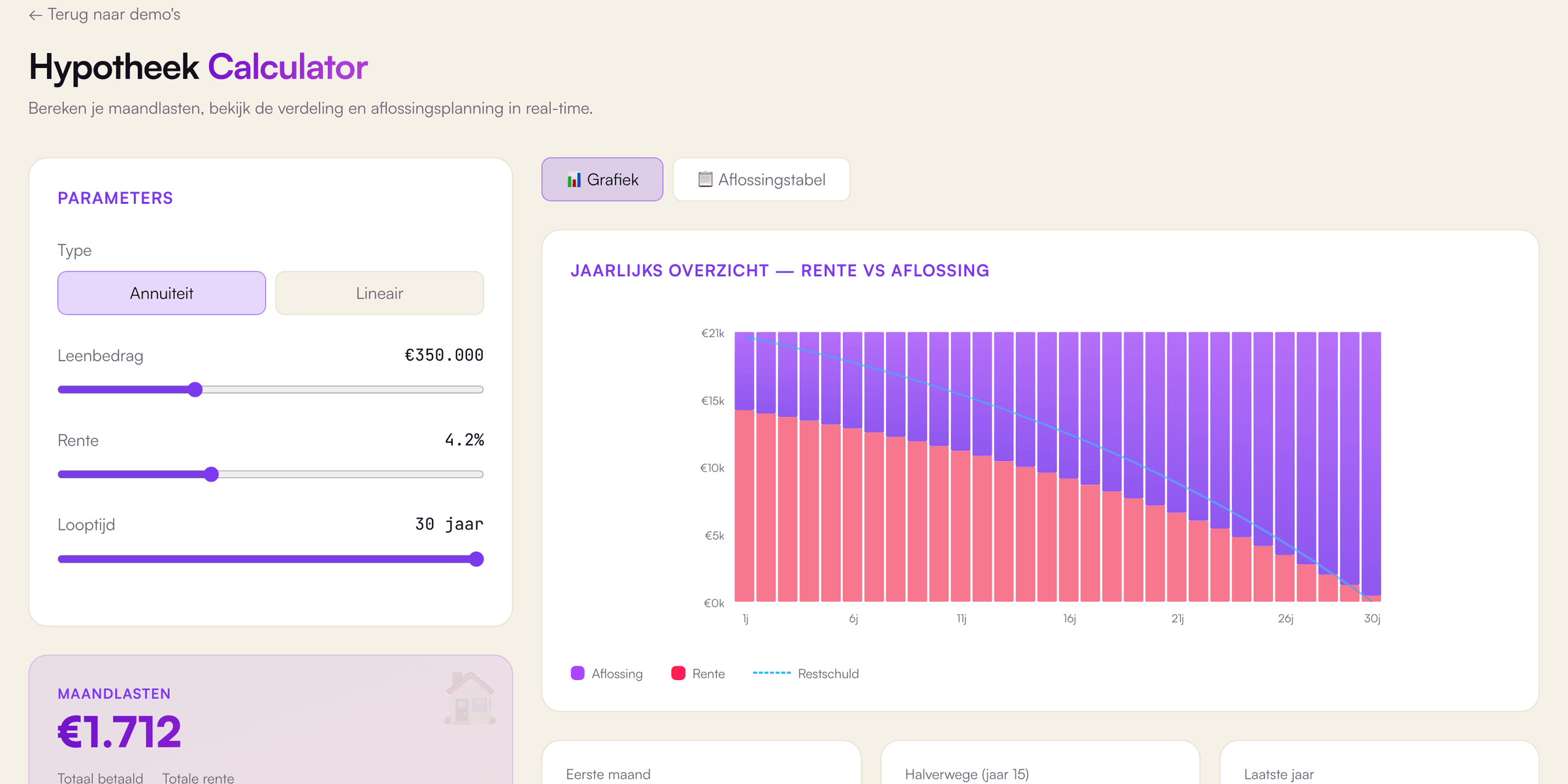
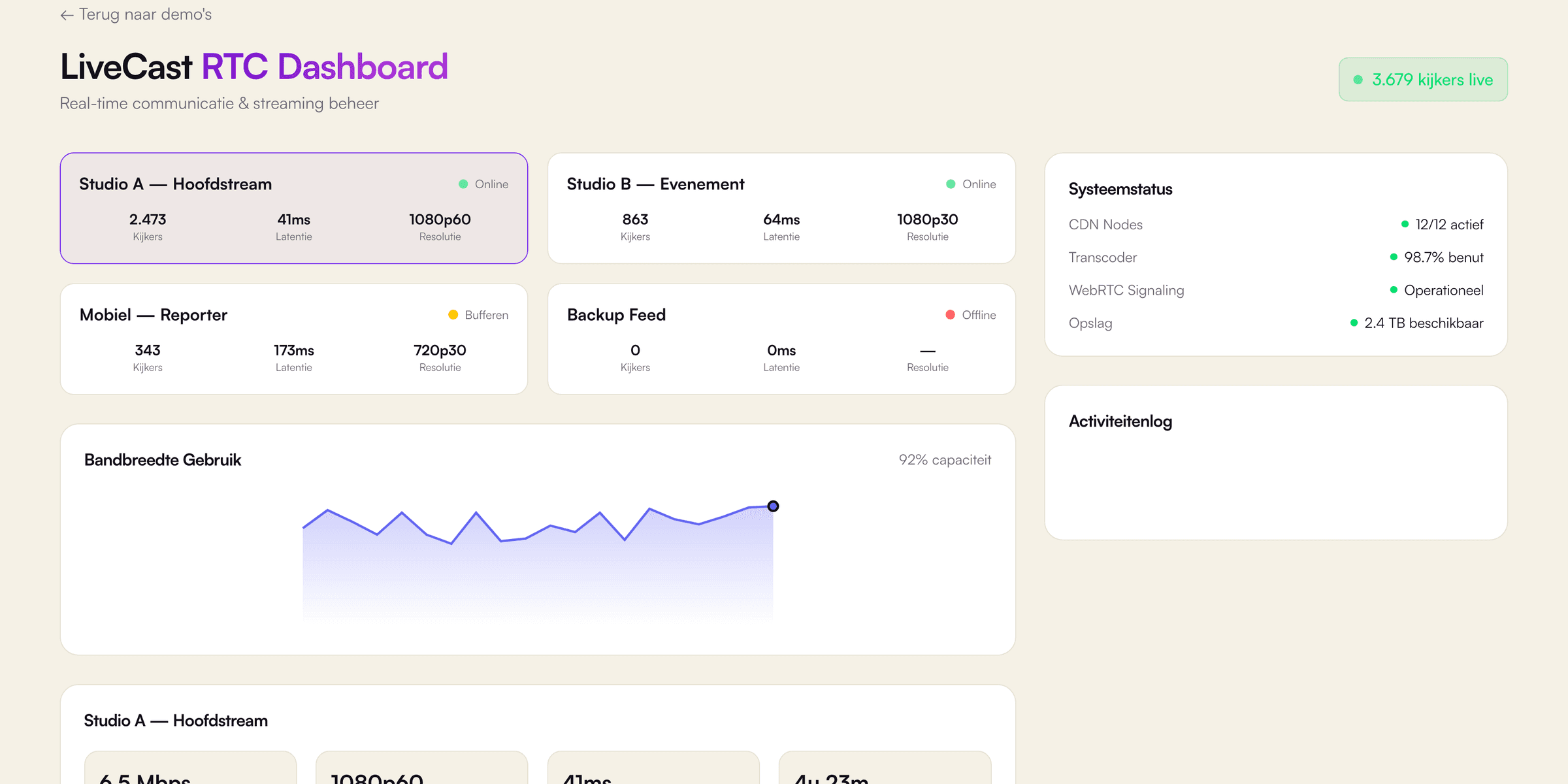
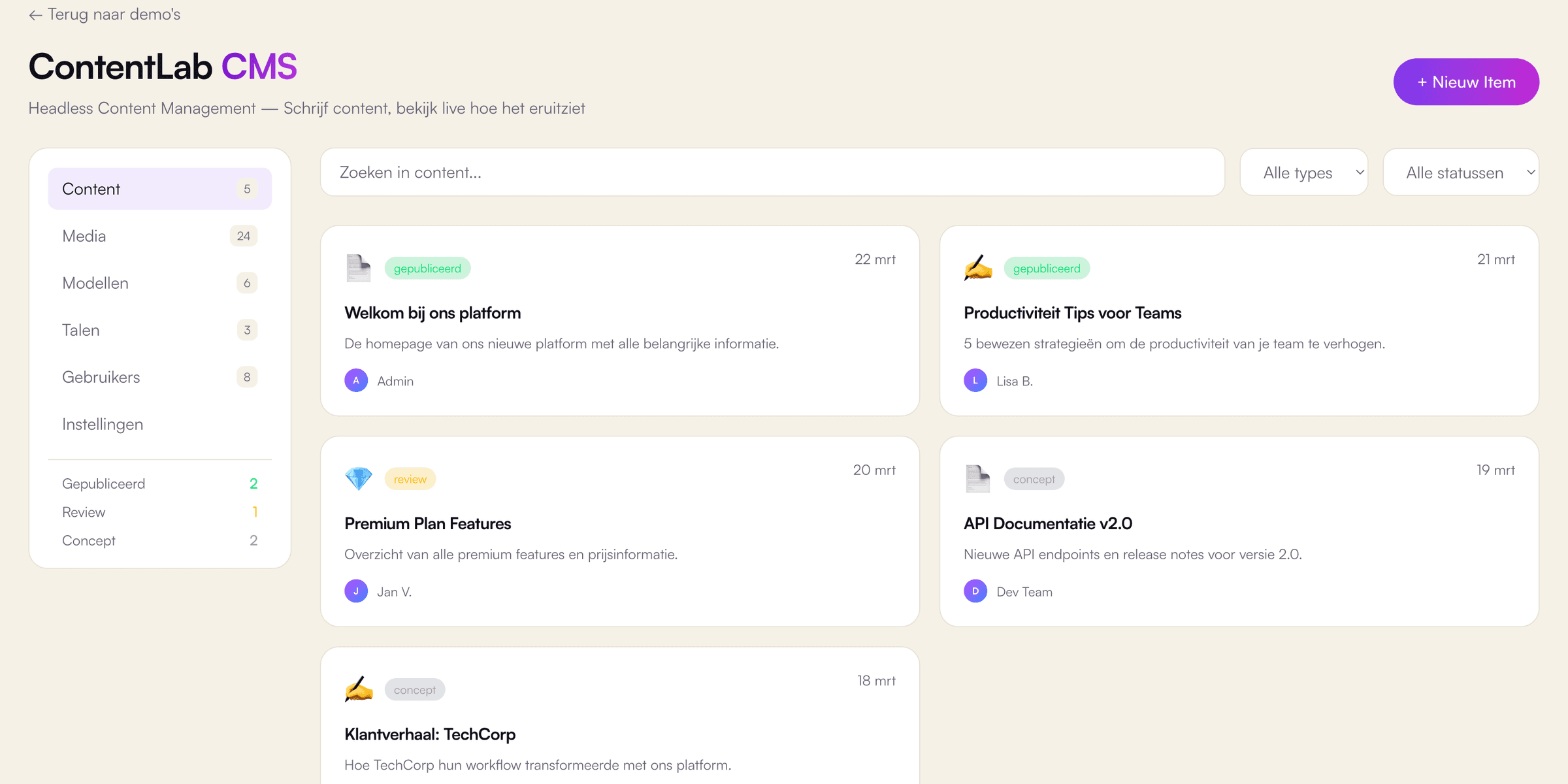
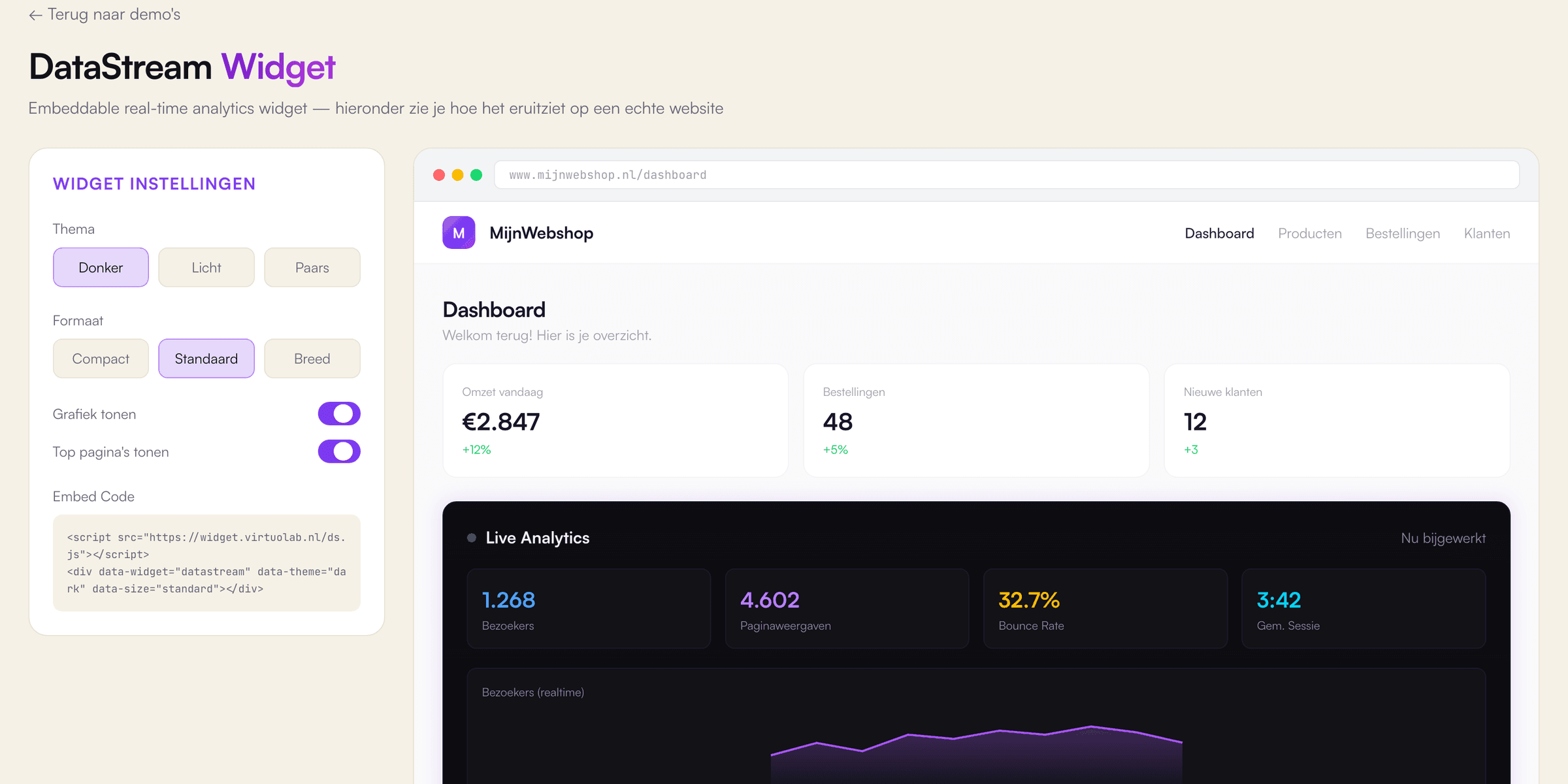
Working demos that VirtuoLab built itself, with sample data. Click through and try them yourself.
How we work
From first conversation to delivery
Comparison
A larger agency or VirtuoLab
Blog
Articles on software and visibility
Reviews
Worked with VirtuoLab?
A review on Google helps other business owners choose. It takes a minute.
Frequently Asked Questions
What does VirtuoLab do?
VirtuoLab is a software agency in Papendrecht, the Netherlands, and builds custom software for small and medium-sized businesses. The services are web apps, iOS and Android apps, SaaS platforms, API integrations, WordPress plugins and Power BI dashboards, plus business websites and webshops. VirtuoLab also makes websites easier to find in Google and in AI assistants such as ChatGPT, an approach known as GEO. All work, from the first intake call to the launch, is done by VirtuoLab's own developer. Every project is custom work instead of a template, with a fixed price agreed in advance. As an indication for 2026, a business website starts at €2,000 and a simple web app at €5,000. The technology is React, Next.js, TypeScript, Node.js and PostgreSQL, with React Native or Flutter for mobile apps. For example, the projects page shows clickable demos with simulated data, such as VirtuoBI, a Power BI-style sales report built in React, and CloudFlow, the admin dashboard of a fictional SaaS product.
What does custom software cost?
Custom software at VirtuoLab is priced per project, with a fixed price agreed before any code is written. The price depends on the number of features, the links with other systems and the platforms. First, as an indication for 2026, a simple web app built with Next.js costs €5,000 to €10,000. Second, a SaaS MVP starts at €15,000, and a complete SaaS platform costs €30,000 to €80,000. Third, a simple API integration costs €1,500 to €4,000, and a custom REST API costs €5,000 to €15,000. A WordPress plugin costs €2,000 to €5,000 for a simple version and up to €25,000 for a complex one. Finally, a dashboard in Microsoft Power BI with 1 or 2 data sources and 5 to 10 KPIs costs €2,500 to €5,000. Hosting comes on top, for example €50 to €500 per month for an app backend. The exact price is set by VirtuoLab after a free intake call.
Can VirtuoLab make my business visible in ChatGPT?
VirtuoLab helps businesses get mentioned in ChatGPT faster and more often, and measures the progress every month. The approach is a discipline called generative engine optimisation, or GEO. ChatGPT is a large channel: OpenAI CEO Sam Altman reported 800 million weekly users in October 2025. First, AI crawlers must be allowed to read the website. Sites opted out of the OAI-SearchBot crawler are not shown in ChatGPT search answers, according to OpenAI. Second, the pages must answer customer questions directly, with the answer in the first sentence. Third, the business must be described consistently across the web, for example on LinkedIn and in Google Business Profile. VirtuoLab then tracks progress with ChatGPT, Perplexity, Google AI Overviews, Gemini and Claude, using a fixed set of questions asked again every month. The page about GEO optimisation explains the full approach.
How do I start a project with VirtuoLab?
Starting a project with VirtuoLab is a matter of three steps, beginning with a free intake call. Step 1 is booking the call by phone, by email or through the contact form on virtuolab.dev. The call takes place online or on location in the Drechtsteden or Rotterdam. Step 2 is the call: the developer maps out goals, wishes and budget, and sketches an approach free of charge. Step 3 is a quote from VirtuoLab with a fixed price and a schedule, before any code is written. Useful input for the first call is, for example, the problem to solve, the expected number of users, such as 20 employees or 2,000 customers, and any existing systems. A rough budget helps: as an indication for 2026, a simple web app built with Next.js costs €5,000 to €10,000. A detailed specification is not needed, because the intake works out the scope. VirtuoLab is reachable Monday to Friday from 09:00 to 18:00, in Dutch, English or German.
Are the projects on virtuolab.dev client work?
No, the projects on virtuolab.dev are VirtuoLab's own work: two live products, FiscalDesk and Bouwklok, and demos built to show what is possible. VirtuoLab does not publish client cases, client names or client results. Each demo is a clickable page built with React, TypeScript and Next.js, running on simulated data without a backend. For example, VirtuoBI is a sales report in the style of Microsoft Power BI, built in React on a fictional dataset of 25,920 rows for 2023 to 2025. Additionally, CloudFlow is the admin dashboard of a fictional SaaS product, and ContentLab is a content management interface with a live preview. LiveCast is a monitoring dashboard for live video streams. ShopBoost is the settings screen of a WooCommerce plugin, and Smart Calculator Pro is an interactive mortgage calculator. Visitors can click through every demo on the demos page. A demo shows interface design and technical choices, but a demo is not a client result, so VirtuoLab presents the demos only as examples.